 名古屋帯
名古屋帯
 袋帯
袋帯
 紬・綿・自然布
 小紋・江戸小紋
 訪問着・付下げ・色無地ほか
 浴衣・半巾帯
 羽織・コート
 肌着
肌着
 小物
小物
 履物
履物
 書籍
書籍
 長襦袢
長襦袢
 小物
小物
 帯
帯
 お召
お召
 小紋・江戸小紋
 紬・綿・自然布
 袴
袴
 長襦袢
長襦袢
 浴衣
浴衣
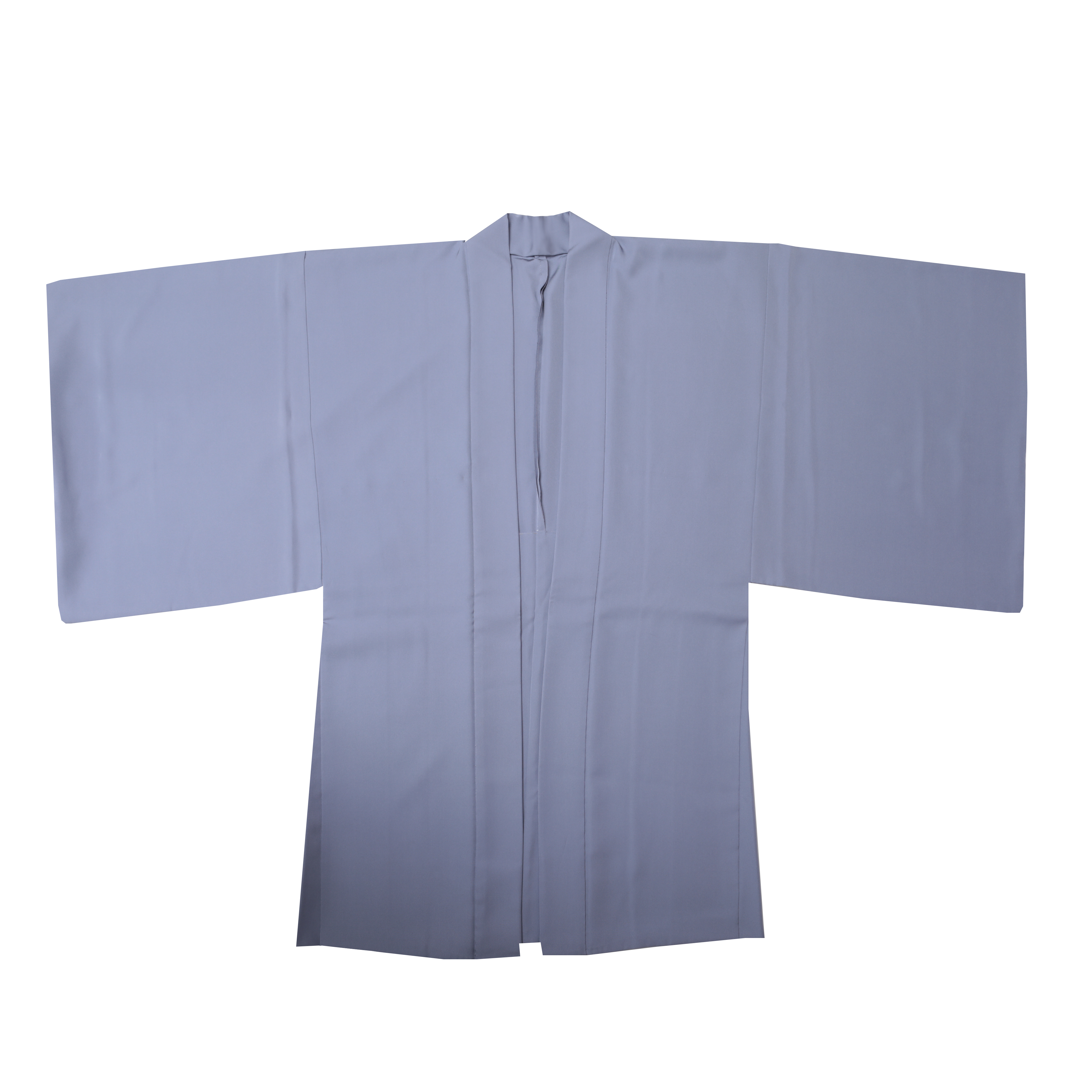 羽織・コート
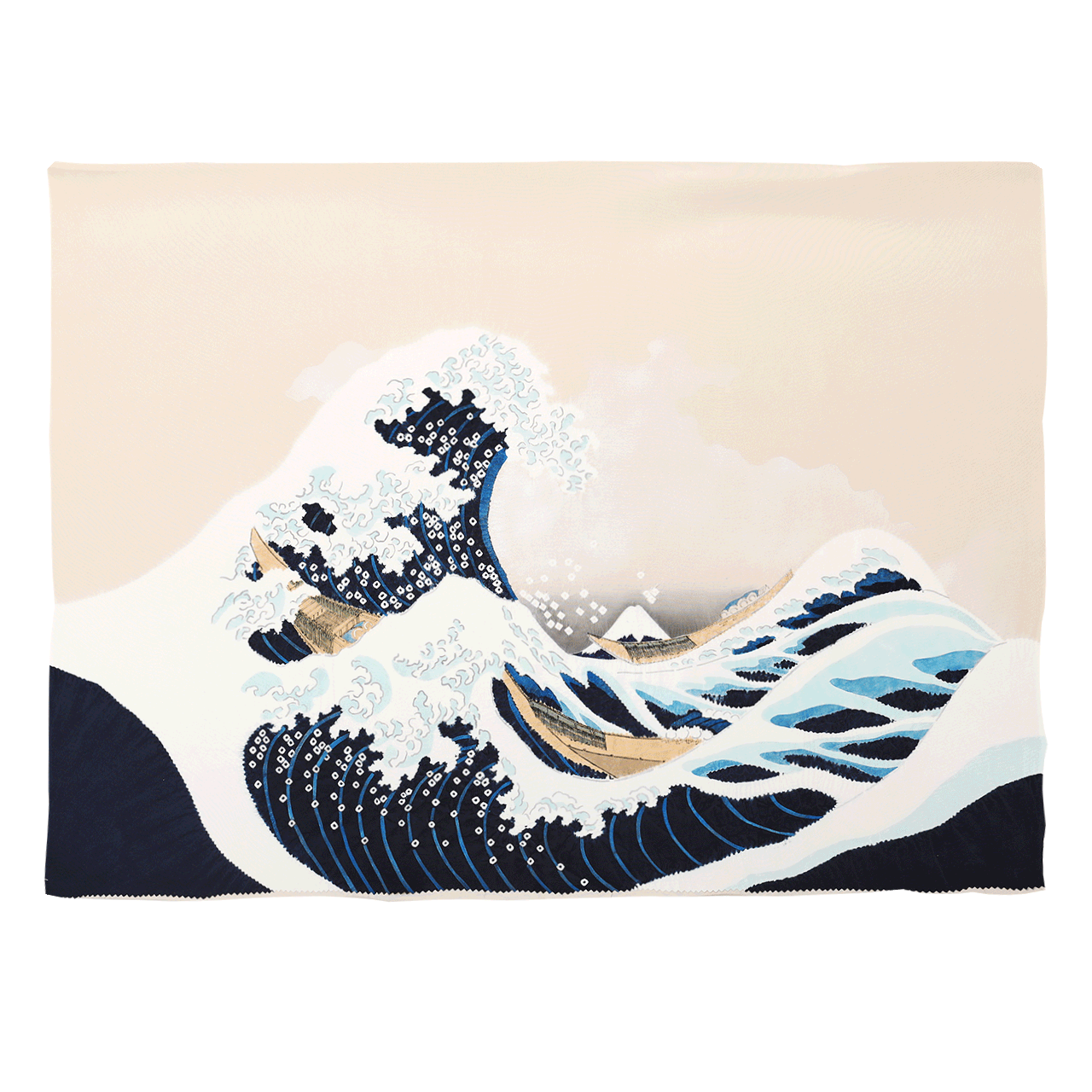 額裏
額裏
 肌着
肌着
 履物
履物
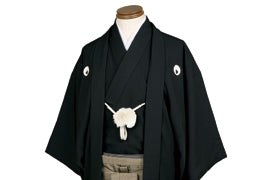 紋付
紋付
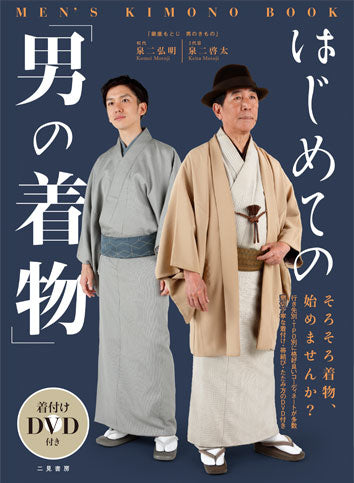 書籍
書籍

Spring Kaleidoscope
ENDO, Akemi - Kataezome (Stencil Dyed) Eba Kimono ¥1,480,000
Text by Craft Writer; TODATE, Kazuko.
Kataezome is a Japanese surface-dyeing technique that uses a hand-cut paper stencil (katagami). The pattern is built up by applying a rice-paste resist (nori) through the stencil, layer by layer, before the cloth is dyed in a wide palette of colours, revealing the design through hand mixed colour and untouched ground.
The term kataezome became widely used after the dyer Keisuke Serizawa (1895–1984) was designated a Holder of an Important Intangible Cultural Property (a Living National Treasure). Within the Japan Kogei Association (Japan Art Crafts Association), of which Akemi Endo is a member.
For this article, we visited Akemi Endo’s studio in Yokohama on 26 September 2025 to speak with her about her work.
The Path of Textiles - Learning at the workshop of IWAI, Kanako
Exhibiting and Taking on the Challenge of Kimono
Endo began presenting her textiles in group exhibitions, and her first kimono was a kataezome work titled Chi-chi-ri. It was later selected for the 8th National Dyeing and Weaving Works Exhibition, held at the Silk Museum in Yokohama in 1983. She submitted the piece under her maiden name, Ito Akemi.
Endo married in 1985, and in the following year, 1986, her work Yugyo (游魚,“swimming fish”) was selected for the 9th exhibition. In Yugyo, a school of fish swims in a single direction, while the spaces between them are filled with the movement and glimmer of water. The fish have playful expressions, yet the overall look of the kimono is somewhat subdued. There is an element of imbalance between motif and colour, but even so, one can already sense Endo’s relatively cool approach to colour.
By chance, Iwai’s studio was close to where Endo lives today, near the site of her husband’s family home, which was later rebuilt. The proximity made it possible for her to remain involved in dyeing even while raising children. With the support of her mother-in-law, who too was a keen kimono lover, Endo continued to refine her craft, and in 2000 she received a Merit Prize for The Cats at the 12th exhibition.
Around the time Endo was submitting work to the Silk Museum’s open-call exhibitions, she found herself drawn to the crisp, modern work of the kataezome artist Isa Toshihiko (1924–2010). She also began exhibiting with the Shinsho Kogeikai, a craft association founded in 1947 by figures including the ceramic artist Tomimoto Kenkichi (1886–1963) and the dyer Inagaki Toshijiro (1902–1963). Dyeing and weaving, including kimono, have remained central to the group ever since.
The association’s records show that Endo first appeared in 2001 at the 56th exhibition with Kokumon, marking her first use of silkscreen printing to create monochrome line work. In 2002, she received the Newcomer Prize at the 57th exhibition for “The Tree that Calls Butterflies”, a kimono that carefully sets pokeweed among fluttering butterflies. She continued to expand her themes in 2004, presenting Fox’s Kaleidoscope at the 59th exhibition, a playful design imagining a fox peering through a kaleidoscope in a field of patrinia (ominaeshi), a yellow wildflower.

Kokumon

The Tree that Calls Butterflies
Developing Motifs at the Japan Traditional Kogei Exhibition
Endo began exhibiting with the Japan Kogei Association (Japan Art Crafts Association), where her teacher Iwai Kanoko is also a member, around the time she turned fifty. Her first selection came in 2006 at the 53rd Japan Traditional Kogei Exhibition. She was then selected in consecutive years, and in 2009 she became a full member. Endo says this timing reflects Iwai’s advice: to enter only once she had the consistency to be selected year after year.
Her first selected piece, the kataezome kimono Soso (奏草), pairs shepherd’s purse (penpen-gusa) with zigzagging blue bands. Even here, a defining feature of her work is already present: plants rendered in line, set against clear geometric structure.
In 2007, at the 54th Japan Traditional Kogei Exhibition, Fuin (風韻) develops this approach further, combining shepherd’s purse with dokudami blossoms (Houttuynia cordata) and balancing dense passages with open space. Shepherd’s purse remains one of her recurring motifs, appearing again in Tsumu Toki (積む刻), a kataezome obi shown at the 65th East Japan Traditional Kogei Exhibition in 2025.
Several major awards mark the steady expansion of her motif and composition. In 2008, her kimono Haruno Mangekyo (春野万華鏡) received the Japan Kogei Association Chairman’s Prize at the 42nd Japan Traditional Kogei Dyeing and Weaving Exhibition. Built around patrinia (ominaeshi), it forms a kaleidoscopic structure in cool blues and greys. In 2015, Kitano (北野) won an Encouragement Prize and the Kyoto Shimbun Prize for a design that constructs geometry from fern forms, followed in 2016 by Harumachi Ame (春待雨), which depicts yatsude leaves (Japanese aralia) in driving rain through layered blues and greens.
More recently, Endo’s Nikkei Prize at the 57th Japan Traditional Kogei Dyeing and Weaving Exhibition (2023) went to the obi Urara (麗ら). Dandelion flowers, seed heads, and leaf silhouettes are scattered and stylised, with ribbon-like forms adding a sense of lift. Endo has spoken about being drawn to plant shapes that feel structural in themselves, such as low, flattened leaves or fern fronds that resolve into triangular outlines.
Alongside these recognisable motifs, she has also been experimenting with quieter effects. In 2023, her kimono Honokana Hikari (ほのかな光) used gofun white on white silk, and in 2025, the obi Mori no Kotoba (森のことば) layered two blacks of slightly different density.
Her most recent major award is the Tokyo Governor’s Prize at the 71st Japan Traditional Kogei Exhibition (2024) for Asunaro no Mori (あすなろの森). Spindle-shaped outlines of asunaro (hiba cypress) leaves repeat across the surface in blue, green, and grey, creating depth through rhythm rather than colour.
Across her work, the palette is intentionally restrained, often built around cool tones and greys. Within that limit, she creates variety through line, spacing, and the tension between botanical form and geometry.
New work: Nagoya Obi “Aru Hi no Niwa” (ある日の庭)
Using this new obi as a starting point, we can trace the main steps in Endo’s process. She develops each design gradually, beginning with simplified studies of the motif and refining them through multiple drafts.
For Aru Hi no Niwa, she tested several layouts, including a horizontal sequence of dandelions and butterflies, and a more densely packed arrangement. In the end, she chose the version with more open space, which lets each form read clearly and gives the design room to breathe.
The butterfly motif also evolved along the way. What began as a Monarch butterfly was reworked into the endangered Tsushima-uraboshi-shijimi butterfly, chosen for its cute round wings. Endo then colours the draft with coloured pencils, using it to check how the hues will balance once the cloth is dyed.
 Kyusun-Nagoya Obi - Aru Hi no Niwa 498,000¥
 Nagoya Obi Mori no Kotoba 550,000¥
Kaku-obi Tsupping 298,000¥


Depending on the shape in the stencil to be cut, various blades are used. Various blades are used for cutting out the shapes in the paper stencil.

 The stencil is applied to the fabric, which is pulled taut over the long board. The resist paste is then applied above the stencil.
Photo - SHIOKAWA, Yuya